
Transcendental Meditation — explained simply
What is TM?
And why is it different?
A simple, natural, effortless technique practiced 20 minutes twice a day — with eyes closed, sitting comfortably. No concentration. No control. Just deep rest for the mind.
An Introduction to Transcendental Meditation
By Dr Tony Nader MD, PhD, MARR
How TM differs from other techniques
Other techniques
—
Requires concentration or focus
—
Involves controlling your thoughts
—
Guided by an app or voice
—
Works at the surface of the mind
—
Needs discipline to maintain
—
Produces theta brainwaves (4–6 Hz)
Transcendental Meditation
✦
Completely effortless — no focus needed
✦
Thoughts come and go naturally
✦
Taught personally, one-on-one
✦
Transcends thought altogether
✦
Enjoyable — people look forward to it
✦
Produces alpha-1 brainwaves (8–10 Hz)
"In this meditation we do not concentrate or control the mind. We let the mind follow its natural instinct toward greater happiness, and it goes within and gains bliss consciousness in the being."
— Maharishi Mahesh Yogi, Lake Louise, Canada, 1968
“TM gives me an island of calm in the midst of so much turbulence.”
— Sir Paul McCartney, 50+ years of TM practice
The Benefits of
Transcendental Meditation
Tap a segment to explore each benefit
Transcendental
Meditation Tap a segment
Meditation Tap a segment
Scientific research
Over 700 peer-reviewed studies — click the arrows to explore
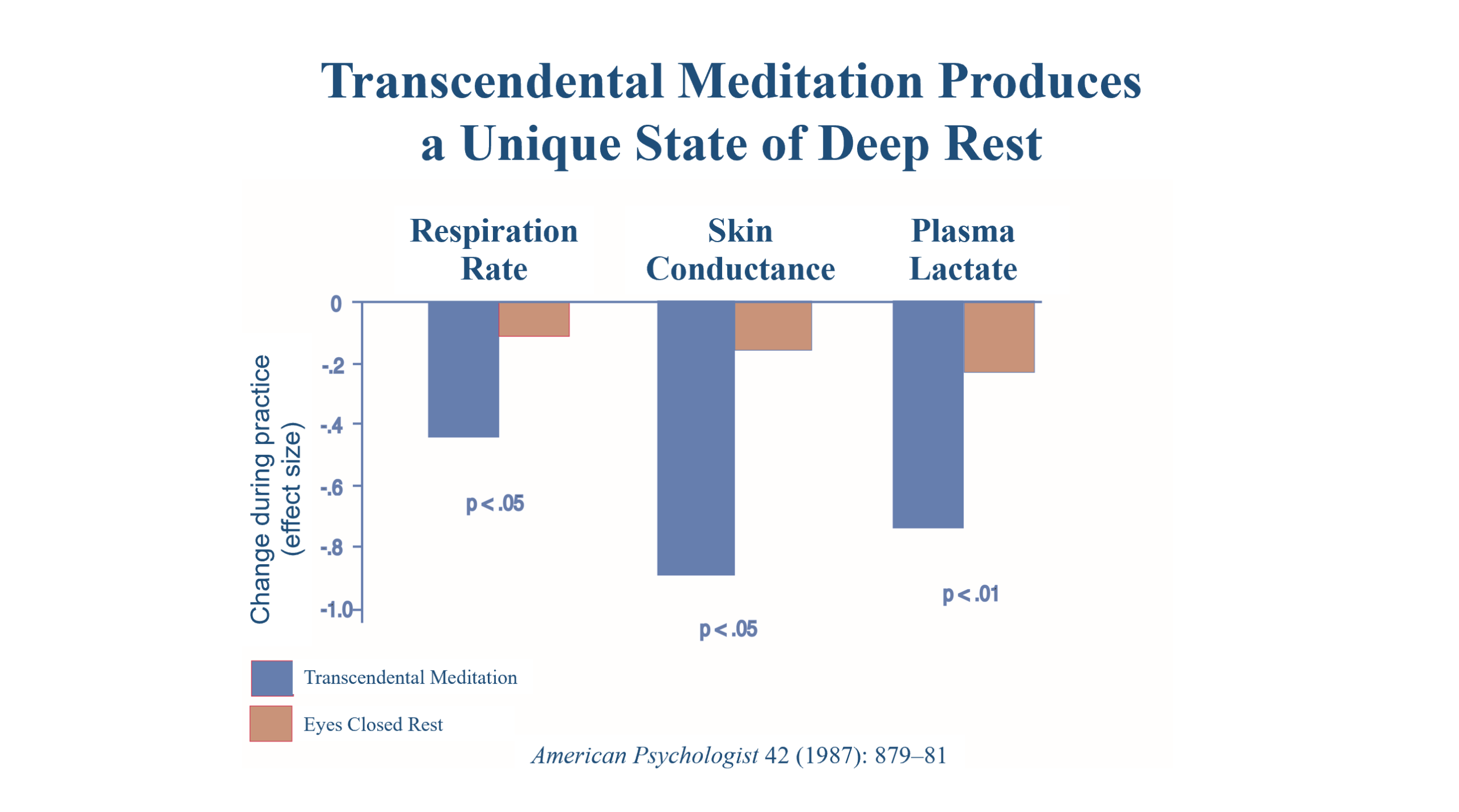
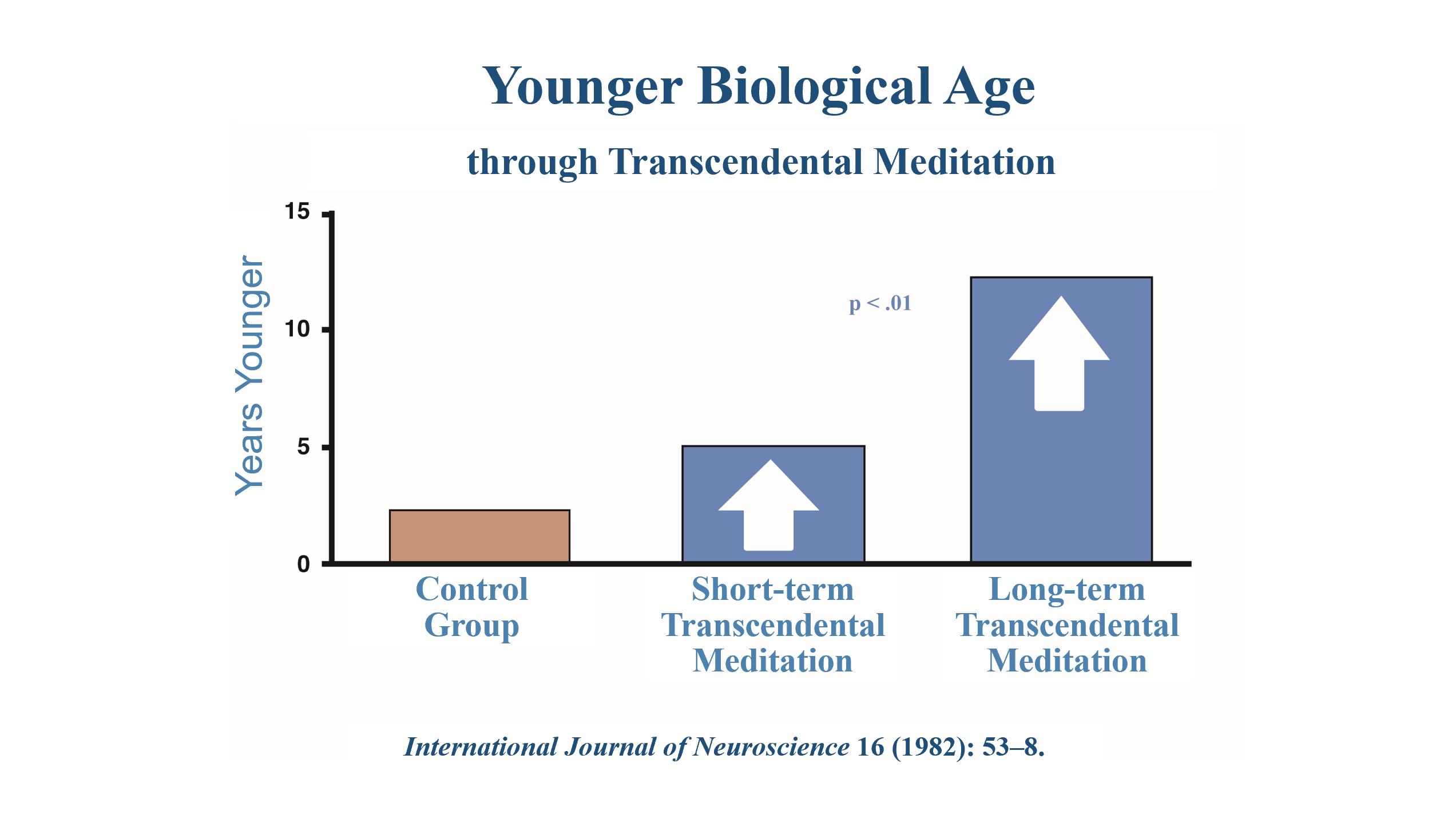
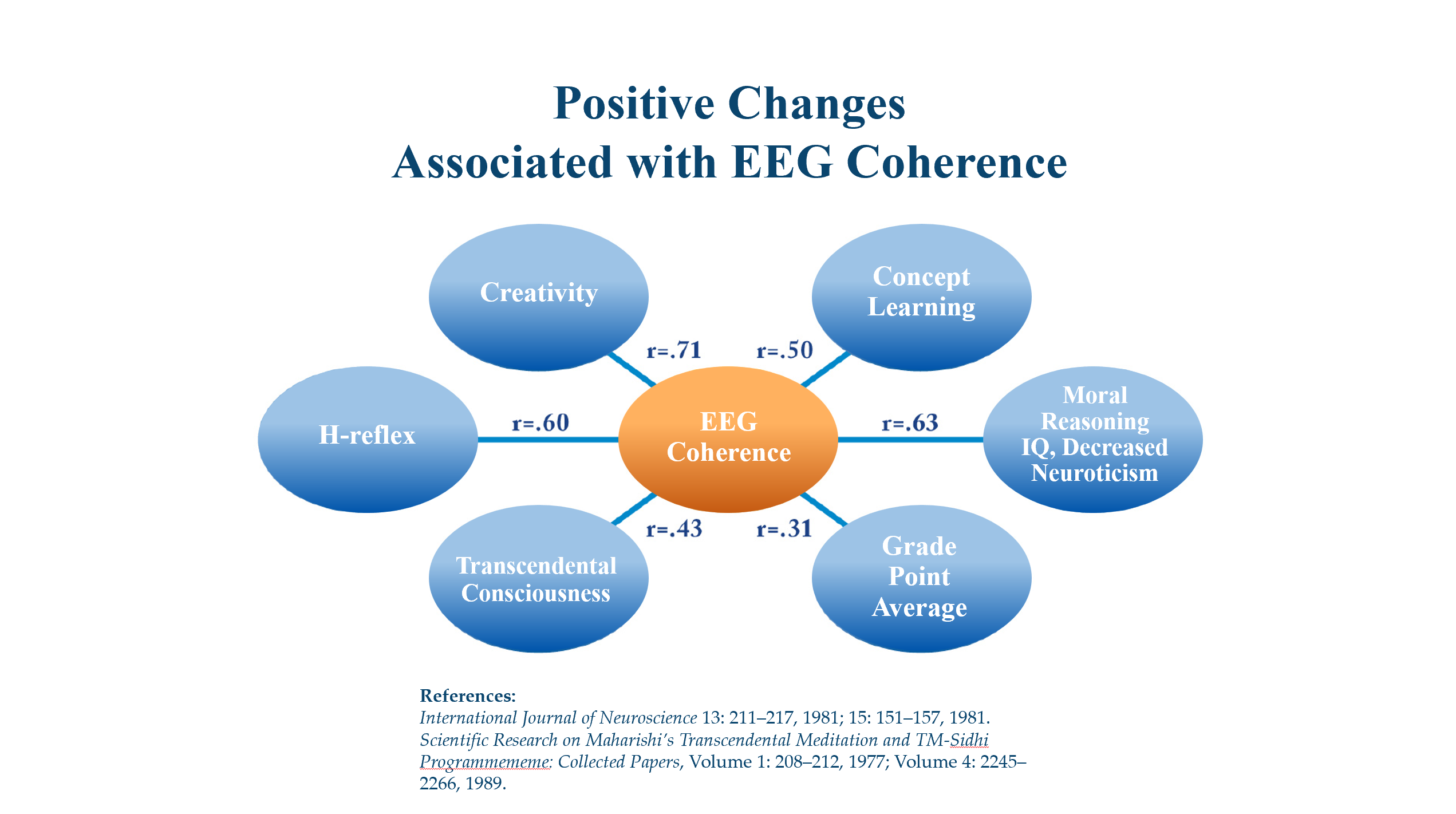
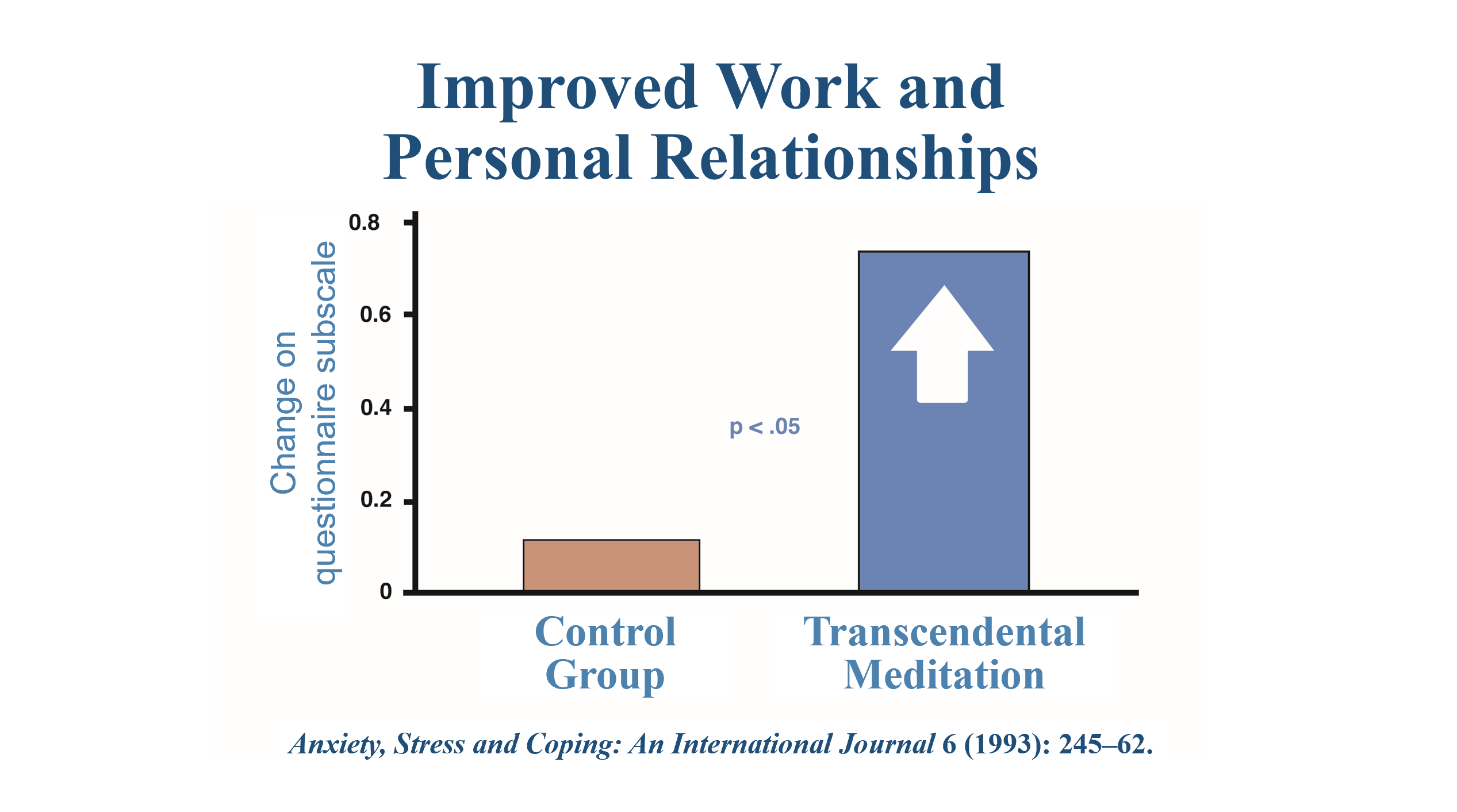
TM produces a fourth state of consciousness
1
Waking
2
Sleeping
3
Dreaming
4
Transcendental
Consciousness
Consciousness
EEG studies confirm a unique state of restful alertness — the body deeply rested, the mind wide awake and clear. This state is found in no other technique.
How you learn TM — 7 steps
1
Free introductory talk
An informal overview of TM — what it is, how it works, and what the research shows.
2
Personal interview
A short one-on-one conversation with your teacher before the course begins. This helps us personalise your instruction.
3
Personal instruction — Day 1
You receive your personal mantra and learn the TM technique in a private, one-on-one session with your teacher. This is where it all begins.
4
Verification & understanding — Day 2
Your practice is verified and you receive the knowledge of what happened during your first meditation. Any questions are answered fully.
5
Clarification of experiences — Day 3
Deeper knowledge of the mechanics of TM and how it produces its wide range of benefits. Understanding deepens the practice.
6
Integration into daily life — Day 4
How to maintain and deepen your practice over time. You leave with the knowledge and confidence to make TM a natural part of every day.
7
Lifetime follow-up support
Ongoing practice checks, follow-up sessions, and support — for as long as you practice. This never expires. You are never alone in your practice.
“Transcendental Meditation has opened up a new world of good health and well-being for me. I am so much more in control of my life. It is such a blessing — I am grateful to have found it.”
— Aisling Drury-Byrne, Musician & Teacher, Royal Irish Academy of Music
Questions people always ask
Click any question to read the answer
Why do I need a teacher? Can't I learn this on my own?
Having a certified teacher guide you in a personal, one-on-one setting ensures:
- You're accurately and effectively learning the Transcendental Meditation technique
- You have the chance to talk through the new experiences that come up
- It establishes the foundation for a lifelong support system
How do you actually do TM? What happens during Transcendental Meditation?
TM is practiced sitting comfortably, with your eyes closed, for 20 minutes, twice a day. During the practice, your mind naturally settles inward into quieter levels of awareness, without asking you to concentrate or control anything. The result is pure consciousness — a unique state of deep rest that helps the body and mind reset.
Is TM similar to other mantra meditations? What is a TM mantra?
Your Transcendental Meditation mantra is a specific sound chosen for you personally by your TM Teacher. Unlike affirmations or other phrases rooted in meaning, your TM mantra isn't meant to keep your mind active or focused. Instead, it's an important part of the technique that helps the mind settle inward naturally and effortlessly.
What does "transcending" mean?
Scientists have studied what happens to the brain during Transcendental Meditation, and it's called "transcending". It's when your mind and body settle inward into a quiet, deeply restful state, while you're still fully awake. There's no concentration or effort required — it all happens automatically through the TM technique. Throughout this process, the nervous system begins to reset, which is what leads to many of the benefits people notice from TM, like less stress, clearer thinking, and greater overall balance. And when you do this day after day, these benefits keep growing.
What if I'm not good at controlling my mind?
That's completely okay, and actually very common. The Transcendental Meditation technique doesn't ask you to control your mind, nor does it require any concentration or effort. The technique works naturally, even for people who feel like their mind never slows down.
What if I'm skeptical?
No worries — a lot of people are at first. The good news is Transcendental Meditation doesn't depend on any religion, philosophy, or belief system to work. In fact, you don't need to change your lifestyle at all. The technique works naturally by allowing the mind and nervous system to settle into a deeply restful state, regardless of whether or not you have doubts.
Can beginners really do it?
Absolutely! Transcendental Meditation is designed to be effortless to learn and practice, even if you've never meditated before. Children as young as 10 years old learn the technique successfully, because transcending is something the mind naturally knows how to do.
Is it safe for anxiety, depression, or trauma?
Transcendental Meditation is a gentle, natural technique that helps regulate the nervous system and create deep rest. Many therapists and healthcare professionals recommend it as a complement to other forms of support and treatment, and it's the only meditation practice ever referenced in American Heart Association guidelines.
Can I do it anywhere?
Anywhere you can sit comfortably with your eyes closed, you can practice Transcendental Meditation. People practice sitting up in bed, riding on the bus, on an airplane, or in a comfortable chair at home. TM is designed to fit into your day, not interrupt it.
What happens during the 4-day course?
You'll learn Transcendental Meditation over four sessions with a certified TM Teacher. The first is a personal one-on-one instruction, followed by three guided sessions designed to deepen understanding, ensure accuracy, and support your experience. Most people describe the learning process as surprisingly easy, and many tell us they wish they'd started sooner.
What kind of follow-up support is there?
Your support doesn't end after the course. You'll continue to have the partnership of your Transcendental Meditation Teacher for guidance, tune-ups, and questions whenever you have them. Plus, you'll have lifelong access to TM Centers worldwide and ongoing support to help keep your practice feeling natural, sustainable, and easy.
How do I learn TM in Phnom Penh?
Learning Transcendental Meditation starts with enrolling in a course with a certified TM Teacher. Your first session is a personal one-on-one instruction, followed by three sessions to deepen your understanding and verify your practice. Here in Phnom Penh, we teach in English, Khmer, French, and Hungarian. The best first step is to book a free introductory talk — informal, no commitment, just an honest conversation about TM.
Ready to experience it for yourself?
The free intro talk is
where it all begins.
where it all begins.
Informal, honest, and no commitment. Just a conversation about TM and whether it feels right for you.
Book your free intro talk →
Sessions in English · Khmer · Français · Magyar
.tm-footer {
background: #1A3A4A;
font-family: 'Inter', sans-serif;
font-weight: 300;
color: #A8CDE0;
padding: 56px 40px 32px;
}
.tm-footer-inner {
max-width: 1080px;
margin: 0 auto;
}
.tm-footer-top {
display: grid;
grid-template-columns: 1.6fr 1fr 1fr 1fr;
gap: 40px;
}
.tm-footer-brand h3 {
font-family: 'Libre Baskerville', serif;
font-style: italic;
font-size: 30px;
font-weight: 400;
color: #ffffff;
margin: 0 0 8px;
}
.tm-footer-brand p {
font-size: 13px;
color: #7AB8C8;
line-height: 1.7;
margin: 0 0 20px;
max-width: 220px;
}
.tm-footer-contact-item {
display: flex;
align-items: flex-start;
gap: 8px;
font-size: 13px;
color: #7AB8C8;
margin-bottom: 8px;
line-height: 1.5;
}
.tm-footer-contact-item a {
color: #7AB8C8;
text-decoration: none;
transition: color 0.2s;
}
.tm-footer-contact-item a:hover { color: #FFD700; }
.tm-footer-icon {
color: #FFD700;
font-size: 13px;
margin-top: 1px;
flex-shrink: 0;
}
.tm-footer-col h4 {
font-size: 11px;
font-weight: 500;
text-transform: uppercase;
letter-spacing: 0.1em;
color: #ffffff;
margin: 0 0 16px;
}
.tm-footer-col ul {
list-style: none;
padding: 0;
margin: 0;
}
.tm-footer-col ul li {
margin-bottom: 10px;
}
.tm-footer-col ul li a {
font-size: 13px;
color: #7AB8C8;
text-decoration: none;
transition: color 0.2s;
line-height: 1.4;
}
.tm-footer-col ul li a:hover { color: #FFD700; }
.tm-footer-col ul li span {
font-size: 13px;
color: #7AB8C8;
line-height: 1.4;
}
.tm-footer-btn {
display: inline-block;
background: #FFD700;
color: #1A1A1A;
font-family: 'Inter', sans-serif;
font-size: 13px;
font-weight: 500;
padding: 11px 22px;
border-radius: 4px;
text-decoration: none;
border: none;
cursor: pointer;
transition: background 0.2s;
margin-top: 4px;
}
.tm-footer-btn:hover { background: #E6C200; }
@media (max-width: 720px) {
.tm-footer-top {
grid-template-columns: 1fr 1fr;
gap: 28px;
}
.tm-footer {
padding: 40px 24px 24px;
}
}
@media (max-width: 480px) {
.tm-footer-top {
grid-template-columns: 1fr;
}
}